

Mexico Chronicles - Part 1
The Shape of What We Keep.

We arrived in Mexico City not at dusk, that hour when the light loosens its grip on the sky and the whole valley seems to exhale. No. We landed early afternoon in a haze of dust. From the airplane window the city had appeared endless, a sprawl of buildings in all directions. This was not a city you merely visited, but one you entered as you might a story already in motion.
We are here to celebrate our 30th wedding anniversary and we’ve invited our three boys and their girlfriends to join us. In the days before we left, friends had offered warnings disguised as concern. Be careful. Stay in the good neighborhoods. Don’t drink the water. It was the sort of advice that flattens a place into a headline. But the Mexico City we stepped into was textured and breathing, fragrant with cilantro and diesel and frying corn. It met us not with menace but with vibrant colour and music.
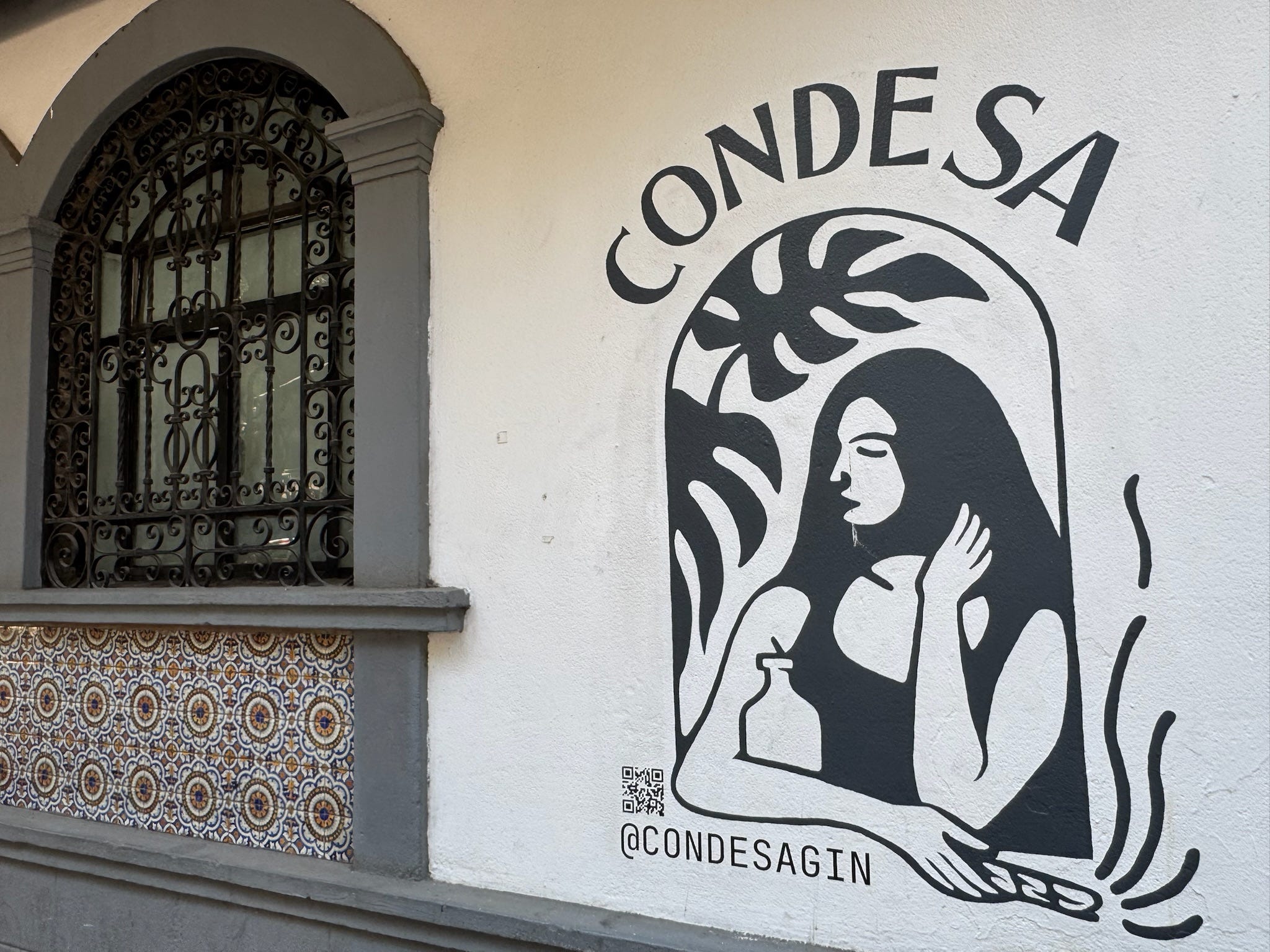
On our first day, we walked without a plan, which is to say we surrendered ourselves to the choreography of the streets of Condesa, where we’d be staying for the first part of our trip. The sidewalks were a mosaic of motion: women tending to baskets of tamales wrapped in damp cloth or minding their food carts of bubbling oil; men in paint-splattered trousers sipping coffee from plastic cups; students in tidy uniforms orbiting one another like bright satellites. Everywhere, the scent of maize—warm, nutty, ancient—rose from griddles set atop wheeled carts. People gathered there, balancing their neon plastic plates topped with juicy meats on tortillas.
A vendor with a face creased like folded linen handed my son, Simon, tacos al pastor shaved in ribbons from a vertical spit. The pork was lacquered and glistening, a burnished red that caught the sun. He crowned each tortilla with a sliver of pineapple and a scatter of onion and cilantro, then pressed a wedge of lime into his palm. There was sweetness and smoke, heat and citrus, the soft give of corn. My son devoured the food, closed his eyes as if listening to a secret. He ate standing up or walking, juice running down his wrists as we managed the obstacle course of cracked concrete and raised or crumbling pavers.
In the markets, colour did not simply exist—it insisted. Pyramids of mangoes blushed gold and green. Chiles lay heaped like jewels: glossy poblanos dark as river stones, serranos sharp and slender, dried guajillos wrinkled and red as old parchment. There were vats of mole the colour of turned earth, their surfaces shimmering with oil, and wheels of fresh cheese stamped with the faint imprint of the basket that had held them. My wife paused at every stall in the market. More than curiosity, it felt like an initiation.
Music threaded through everything. A busker’s guitar stitched together the hum of traffic and the distant wail of a siren. From an open doorway came the metallic clatter of dishes and a burst of laughter so full-bodied it seemed to rattle the glass. Even the vendors had their own cadences, their calls rising and falling in elongated vowels that turned commerce into chant. The city did not so much speak as sing.
We found ourselves one afternoon in a small cantina where the walls were painted a blue so saturated it bordered on defiance. An elderly man in a pressed white shirt sat alone at the bar, nursing a beer. I thought about my writing and how easily we consign places to caricature, how we confuse complexity with danger, vibrancy with volatility. Yet here was a city opening itself to us.
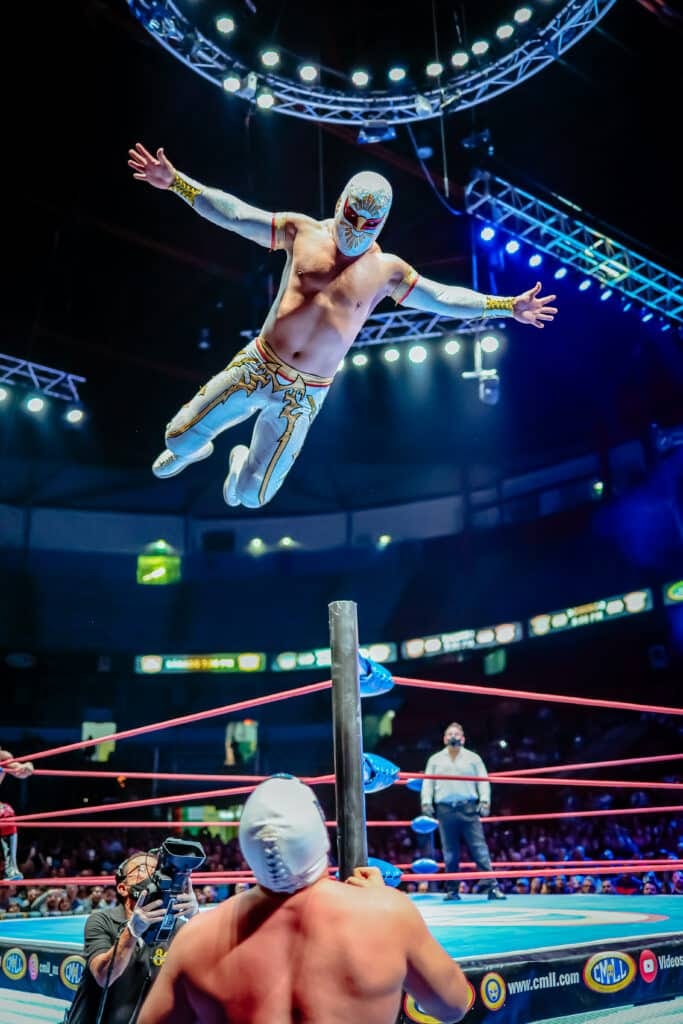
The night we went to lucha libre (I guess it’s at terribly touristy thing to do but I had fond memories of watching wrestling on Sundays with my Tia Albina and the same thrill remained). The air outside the arena was electric. Vendors sold masks in impossible colours—neon pink, metallic silver, a blue so bright it seemed to hum. Some sequined, others glittering in gold or silver lame. If my children had been younger, I could picture them tugging masks over their faces with solemn delight. The masks would transform them instantly into small, caped creatures, half-hero, half-mischief. I imagined them as children, coming home after seeing the fantastically masked men in the rink, how they’d try to imitate the fighting until inevitably one of them would let out a shriek of pain and would have to be soothed by me or my wife. It still happens now, the soothing, but it’s taken on a much more mature form. That evening took on the shape of what we keep, I thought, how things should be in a carefree world.
Inside, the arena was a cathedral of noise. Families filled the seats—grandmothers with braided hair, teenagers draped over railings, fathers balancing toddlers on their knees. The ring glowed under harsh white lights, its ropes taut and expectant. When the wrestlers burst through the curtains, the crowd surged to its feet as one body. There were cheers and boos, whistles and chants, a symphony of allegiance. The matches themselves were theatre of the highest order—staged, yes, choreographed down to the last dramatic tumble, but no less thrilling for it. The luchadores leapt from the ropes with a kind of rehearsed precision, their capes snapping behind them. They were mythic in their masks, avatars of good and evil locked in ritual combat. One villain preened and taunted the audience, drawing a chorus of delighted jeers. A hero, clad in gold, rallied the crowd with an outstretched arm, as if summoning not just applause but belief.
What moved me most was not the spectacle itself, though it was dazzling, but the way the crowd participated in the story. A woman behind us shouted advice to her favourite wrestler as though he could hear her over the din. A boy a few rows down wept openly when his hero was pinned, only to spring up moments later when the tables turned. It was communal storytelling, a reminder that even in an age of solitary screens, we still crave the shared gasp, the collective roar. My sons mouths agape, all hugging their one litre jugs of micheladas—a Mexican beer cocktail made by mixing light Mexican lager with fresh lime juice, Clamato juice, Worcestershire and soy, hot sauce, and ice. “Did you see that?” Their eyes wide with wonder. I nodded, feeling that this spectacle had turned them all into little boys again.
In the days that followed, the city continued to reveal itself in layers. We wandered through parks where couples danced beneath the trees, their steps sure, lacking any sense of the selfconscious. We stood in plazas where history pressed close, where stones remembered empires and revolutions. At every turn, someone offered directions, a recommendation, a smile. Generosity seemed woven into the urban fabric, as essential as the cobblestones underfoot.
And then there was Teotihuacan.
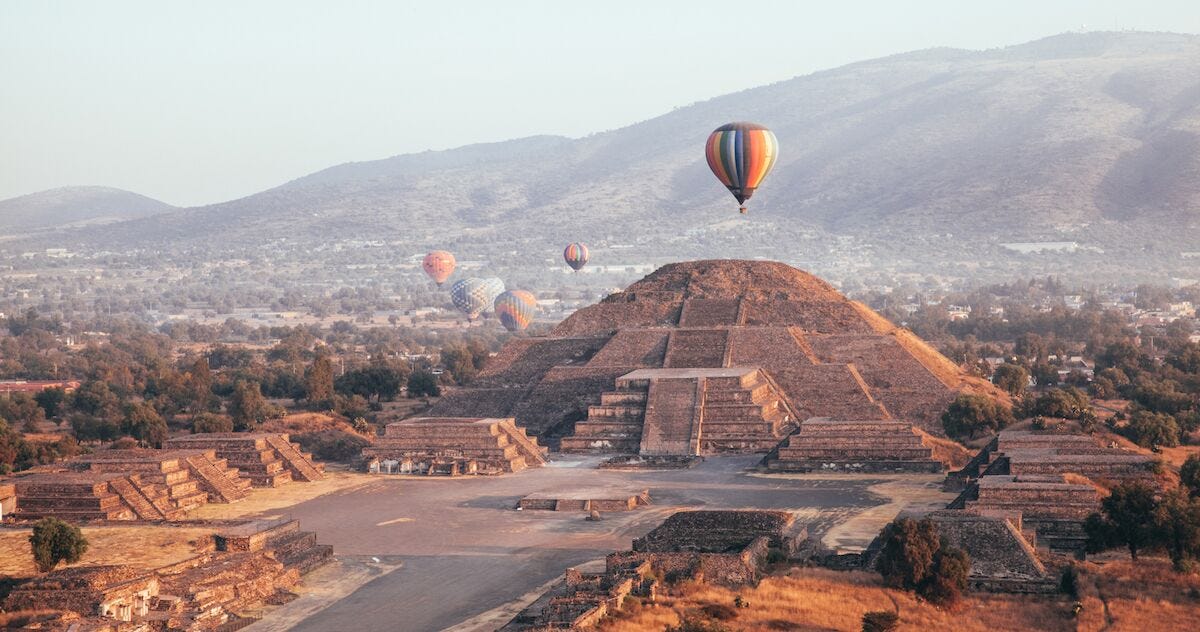
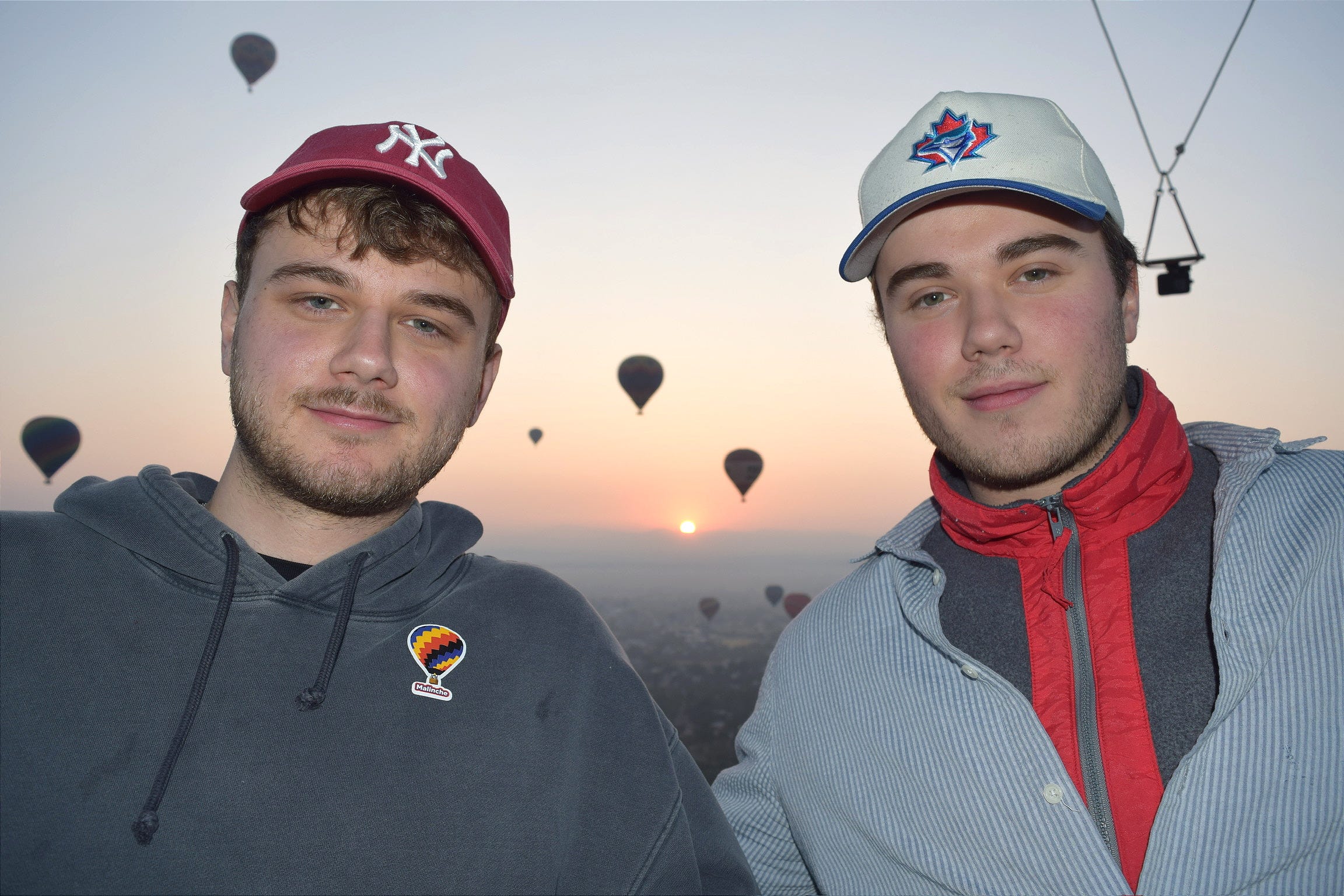
We rose before dawn to make the drive, the sky still a pale wash of grey. Some of us chose to begin the day with a hot air balloon ride, while those who feared heights (me included) went straight to the pyramids. As we approached, the pyramids emerged from the haze like the backs of sleeping giants. The Pyramid of the Sun dominated the landscape, massive and unadorned, its steps ascending in solemn defiance of time. We climbed slowly, each step felt like an invocation. I remember studying these very same pyramids in my Aztec ethnohistory course at UofT, but being here was incredible. From the summit, the Avenue of the Dead stretched out in austere symmetry, flanked by ruins that once thrummed with life. I tried to imagine the city at its height: the markets, the ceremonies, the daily intimacies of a civilization that flourished here long before our own maps were drawn. There was wind at the top, insistent and clean. It carried with it a silence that was not empty but saturated with memory.
Standing there, I felt a hum beneath my feet, as if the stones themselves retained a charge. Teotihuacan was not merely an archaeological site; it was a testament. To ingenuity. To devotion. To the human impulse to build something that outlasts us. Civilizations rise and fall; this we know. Empires crumble into dust. Yet here were these pyramids, enduring. They had witnessed conquest and colonization, earthquakes and neglect, and still they stood. I thought of the headlines waiting back home, of borders hardening and rhetoric sharpening, of a world that often feels as fractured as an ancient shard of pottery. And yet, from this height, the fractures seemed less permanent. Teotihuacan reminded me that we are part of a long continuum, that our present turmoil is a chapter, not the whole book. The people who built these pyramids could not have imagined us standing here centuries later, snapping photographs and whispering in awe. And yet they built anyway. They aligned stone with sky. They created a city oriented toward the cosmos.
As we descended, the sun climbed higher, casting sharp shadows along the steps. I felt, unexpectedly, a swell of hope. Not the naïve hope that denies difficulty, but the steadier kind that recognizes resilience. If a civilization could rise from this valley, if a city like Mexico City could pulse with such generosity and colour despite its trials, then perhaps we, too, are capable of building something luminous.
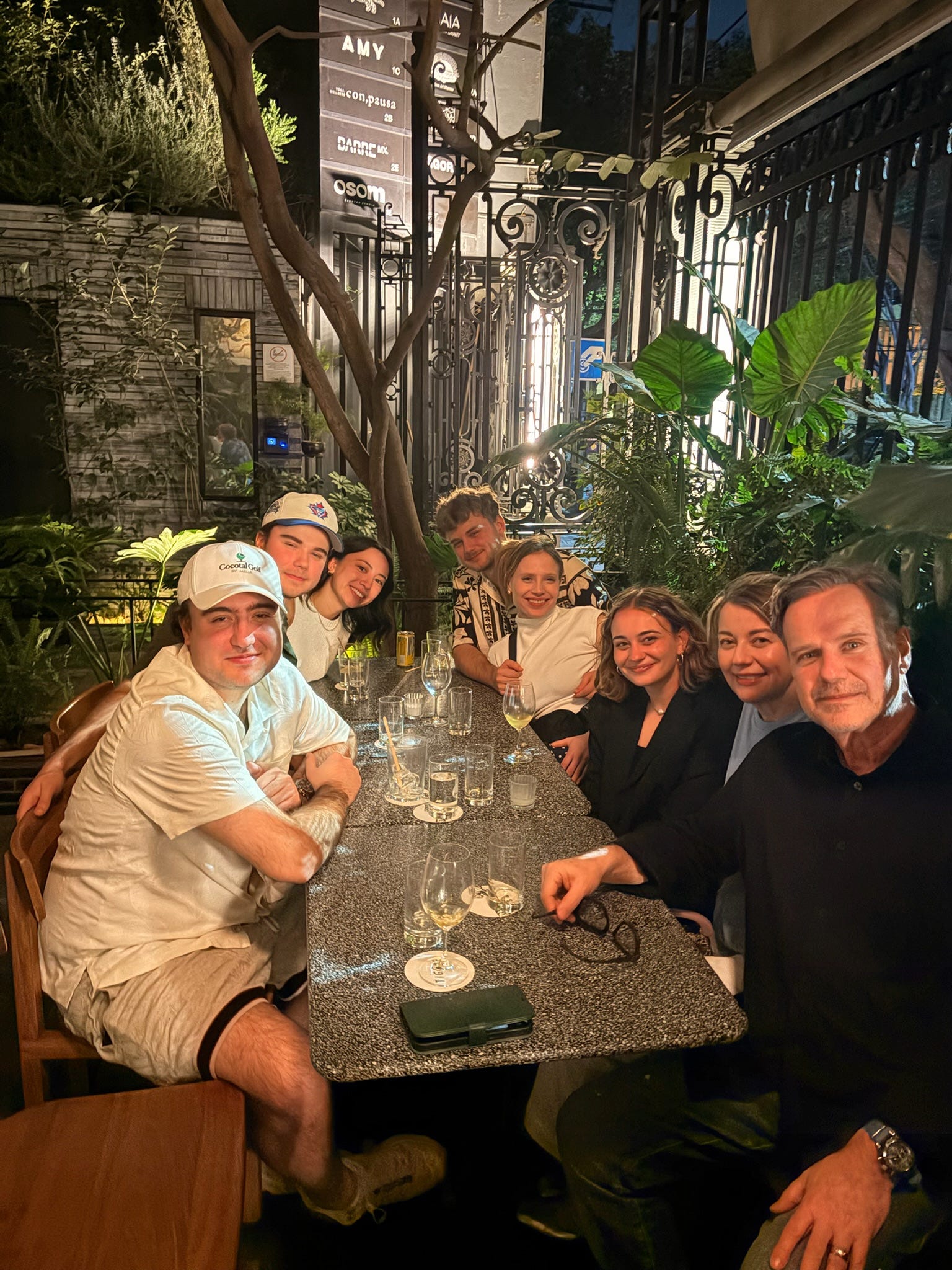
On our last evening, back in the city, we ate at together at a place to celebrate our anniversary. The sky was streaked with pink and gold. Outside, a street vendor fanned his grill, sending up sparks that briefly rivaled the stars. Around us, the city moved in its ceaseless rhythm—voices, engines, footsteps, song. I looked at my family, took them all in and was thankful, my heart full. I thought of the old man in the cantina, of the wrestler in gold, of the wind atop the pyramid
.
Mexico City had unsettled me in the best way. It had dismantled my preconceptions and replaced them with something richer, more demanding. It asked me to see beyond the narrow frame of fear and into the vastness of shared humanity. In a moment when the world feels pulled taut by division, this city offered a counterpoint: colour against greyness, community against isolation, history against amnesia.
As night fell, the lights flickered on, one by one, until the valley glowed again like a fallen constellation. It looked like a galaxy you could walk into. I was thinking about possibility. And for the first time in a long while, I felt that possibility, too—a quiet conviction that even amid the noise of geopolitics and the churn of uncertainty, there are places and people who remind us who we might yet become.
Everyone was going home the next day, leaving my wife and I to explore Mexico City together, alone. It would be a quiet reprieve before we headed out to San Miguel de Allende . . . that was until news spread that the Mexican militia had killed the head of Mexico’s largest drug cartel and in retaliation, the onslaught of images and social media messages flared across our screens.
To be continued . .
.
Happy Anniversary!
A beautifully, evocatively written piece, teaming with sensory details and sincere emotions. Its been a while since I've read something so captivating! thank you for sharing!