

"The Layabouts"
Every novel begins with an annoyance.

For me, a new piece of writing does not begin with an idea. Not a character. Not a carefully arranged outline pinned above a desk. An annoyance.
This one began in Toronto, during one of those January afternoons when the city resembles a grey receipt at the bottom of a shopping bag. The snow along the sidewalks had transformed into ridges of soot. Streetcars and buses groaned like old men getting out of chairs. Every face seemed engaged in a private argument with the weather. I remember standing at a corner watching a man curse at a parking meter with the conviction of a medieval priest confronting a demon. He jabbed at the machine. The machine ignored him. The machine, in fact, possessed the superior temperament.
That was when I first thought about writing a book tentatively titled, The Layabouts. Not the lazy, exactly. Not the idle. Something more noble than that. People who had stepped slightly outside the machinery of modern life. People who knew things. People who sat in cafés for three hours and somehow learned more about the world than men who attended meetings all day. People who understood that conversation was a kind of work. People who lingered.
And then I thought of the Azores. More specifically, I thought of Lomba da Maia, the sleepy coastal town my family hails from on the island of São Miguel.
And like all dangerous thoughts, it arrived quietly . . .
For years, my imagination had been rooted in Toronto. The city had supplied me with endless material: immigrants carrying entire histories in grocery bags, fathers and sons separated by language, mothers preserving old worlds inside kitchens, people forever arriving somewhere they had already left. You see, I firmly believe that Toronto is a city of becoming.
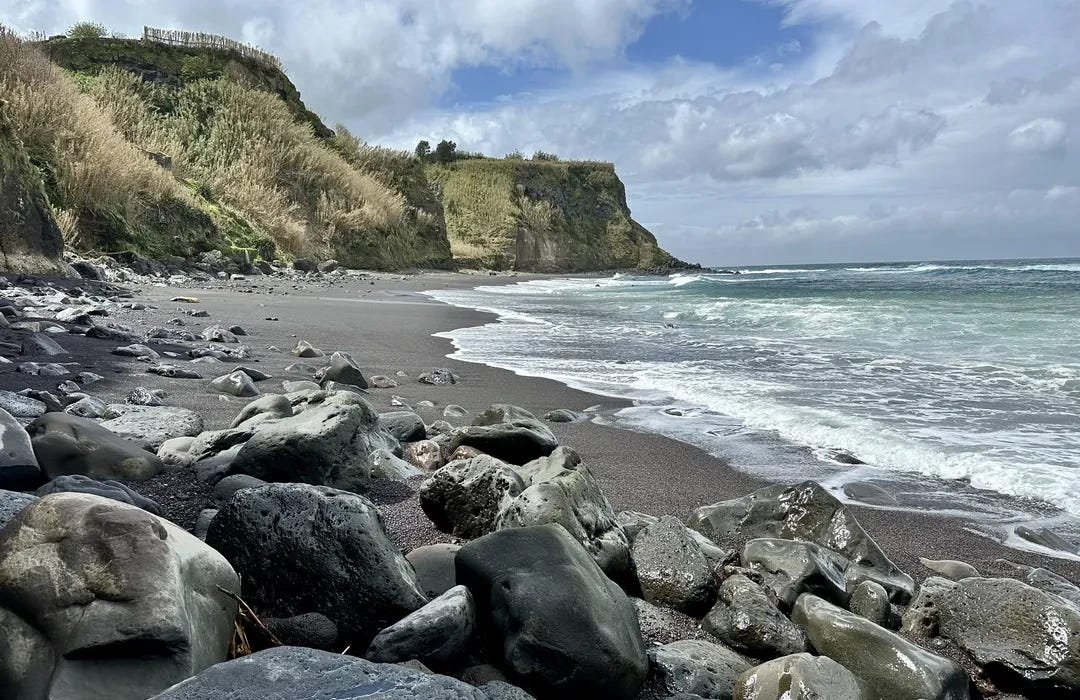
The Azores, on the other hand, belong to memory. Or perhaps to something stranger than memory and whenever I think of São Miguel, I think first of colour. Not the obvious colours tourists photograph, but the impossible shades hidden in ordinary things. The green of the hills appears invented. The blue of the ocean changes personalities every hour. A hydrangea bush erupts beside a stone wall as if colour itself has escaped confinement.
Nothing remains still there. The clouds drift. The fog gathers. The sea advances. The sea retreats. Even certainty seems temporary.
For a writer, this is irresistible.
… and terrifying.
Because setting a novel in Lomba da Maia feels like stepping onto unfamiliar ground while simultaneously returning to an unknown home. It most likely means visiting for a few weeks to do research. It’s one of the perks of being a writer in my quest to get the fine details right—the sounds and smells, and most importantly, filling my novel with a colourful cast of characters.
I know the village. I don’t know the village. I recognize the roads. I don’t fully understand the people. Every place contains two versions of itself: the real one and the imagined one. Novelists spend their lives confusing the two.
The real Lomba da Maia sits along the northern coast of São Miguel, facing an ocean that often appears undecided about whether it wishes to welcome you or swallow you. The imagined Lomba da Maia—the one emerging in my mind as I begin The Layabouts—contains all the truths of the real place but operates according to the emotional logic of fiction. There, everyone knows everyone. Everyone knows everyone’s grandparents. Everyone knows who borrowed money in 1987 and never returned it. Everyone knows who married beneath themselves. Everyone knows who drinks too much. Secrets survive approximately twelve minutes. This is fertile ground for comedy. It is also fertile ground for tragedy. after all, the two are good neighbours.
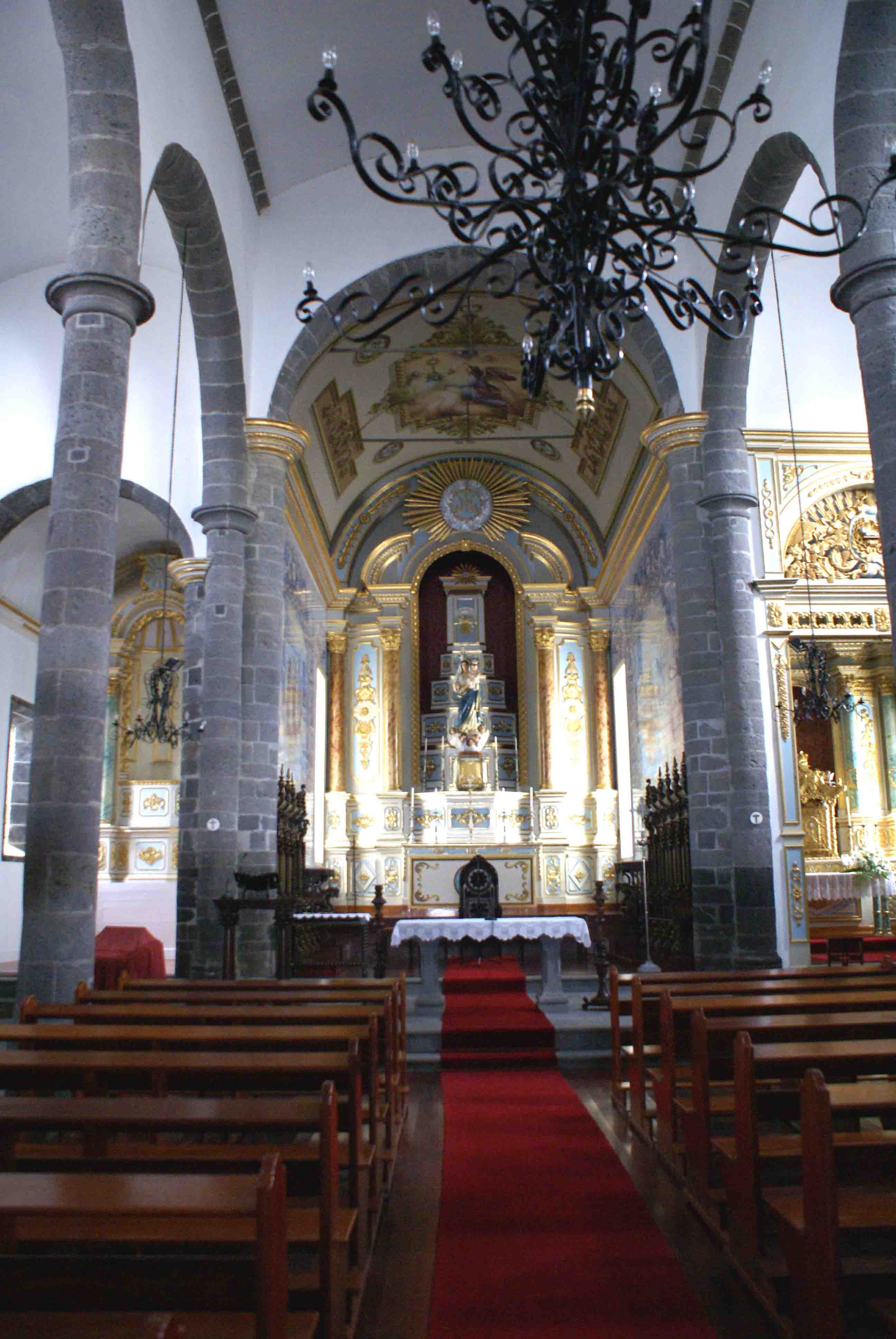
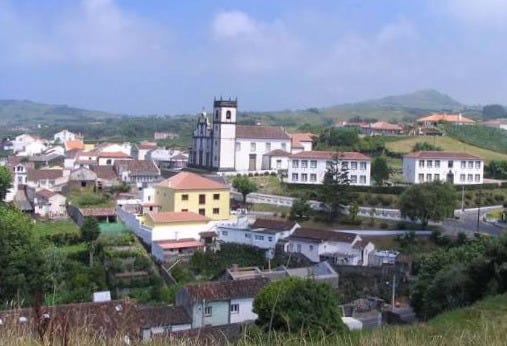
What draws me most strongly to the village is not its beauty but its characters. Every community possesses them. The unofficial historians. The professional gossips. The men permanently repairing things that were never broken. The women capable of dismantling a person’s reputation using only a raised eyebrow.
Then there are the layabouts. Toronto has them. Every village has them. Men stationed permanently outside cafés. Men who have retired from jobs they barely attended in the first place. Men who don’t have jobs and don’t plan on being employed anytime soon. Men who gather to discuss politics, weather, religion, football, fishing, and municipal corruption with identical expertise. And men who, when a woman or young girl passes by, leer or make suggestive noises. I saw it every day growing up. These are men who seem to exist outside conventional measurements of productivity.
As a child, I mistook them for idle. I always veered away from them on the sidewalk because there was something, not dangerous, but unpredictable about them.
As an adult, I suspect some are philosophers or at least comedians. The distinction is often exaggerated.
At the centre of this world I’m creating stands José. I find myself thinking about him long before I understand him. This is usually a good sign. Characters who arrive fully formed tend to disappoint me. They become predictable. They behave.
José does not behave. He resists explanation. He contradicts himself. He believes one thing in the morning and another by dinner. He is funny because he is serious. He is serious because he is afraid. And fear, I suspect, lies at the centre of him.
Immigrant stories are often told through movement. Someone leaves. Someone arrives. A border is crossed. A language is lost. Another language is acquired. But José interests me because he occupies the emotional territory between departure and arrival. He belongs to more than one place. Which often means belonging completely to neither. This condition is familiar to many immigrants and their children. You learn to become a translator between worlds. Not merely languages, but expectations. Histories. Silences. One version of yourself speaks one way at home. Another version speaks differently outside. You become a collection of adaptations: useful, necessary, exhausting.
José understands this instinctively. What he doesn’t understand is who he is when no translation is required.
That question follows him when he is called to return to Lomba da Maia to care for his ailing mother. He does so dutifully, but the questions sit beside him at the village cafe. It accompanies him down roads he had wanted to forget. It watches him from the ocean. Especially the ocean. The sea in this novel is not scenery. It is a character. Perhaps the oldest character. The Atlantic has shaped every life on those islands. It brought settlers. It carried emigrants away. It delivered prosperity. It delivered heartbreak. It offered possibility and demanded sacrifice. For generations, people stared across that water imagining other lives— in Canada or America or Brazil. A better future, or perhaps, a different future. Sometimes those proved to be the same thing. Sometimes they did not.
The immigrant imagination is fundamentally oceanic. I contend you are always looking toward another shore. That tension interests me. But I don’t want to write a solemn novel about longing. What excites me about The Layabouts is humour. People assume comedy avoids pain. In reality, comedy often walks directly into pain and pulls up a chair. The funniest people I have known were carrying the heaviest burdens. Immigrant communities understand this better than most. Humour becomes survival equipment. Families transform misfortune into stories. Stories become legends. Legends become identity. I am fascinated with how memory edits relentlessly. Exaggeration becomes a form of love. I want this novel to inhabit that tradition. I want readers to laugh. Then pause. Then feel slightly guilty for laughing. Then laugh again.
The village itself seems perfectly suited for satire because it contains the universal disguised as the local. Every argument in a small community eventually becomes an argument about human nature. Who deserves respect?Who deserves forgiveness? Can people change? Do they want to? How much of our identity belongs to us and how much belongs to the stories others tell about us?
These questions follow José through the novel. So does loneliness. The loneliness of feeling divided. The loneliness of returning somewhere and discovering it has continued without you. The loneliness of recognizing your childhood home while simultaneously feeling like a visitor. Every immigrant narrative contains this ache. The place you left changes. You change. Memory remains stubbornly unchanged.
The collision is inevitable.
Yet whenever I drift too far into melancholy while imagining this book, the village intervenes. Someone says something ridiculous. Someone starts a feud over a matter of astonishing insignificance. Someone becomes convinced they possess secret knowledge regarding an illicit affair with a farm animal, the secret ingredient Maria (everyone in the novel is named Maria) puts in her masa sovada, or divine intervention. And suddenly the novel laughs at itself. Please note here that my intent is not to ridicule the good people of these small villages, it is to exult them and make readers see their inherant beauty and goodness.
Because beneath every serious theme in The Layabouts lies a simpler fascination. People are strange. Wonderfully weird. Beautifully complicated. A village gathers all those strange people together and forces them into daily contact. Nobody escapes and nobody remains mysterious for long.
As I begin this novel, standing figuratively between Toronto and São Miguel, between memory and invention, between comedy and longing, I feel both excitement and uncertainty.
Good.
A novel should begin there.
In uncertainty.
If I already understood everything, there would be no reason to write.
So I return to José.
I return to the village of my parents and grandparents.
I return to the green hills descending toward the Atlantic.
I return to the men sitting outside cafés conducting unofficial inquiries into the state of the world.
The layabouts.
The philosophers.
The comedians.
The witnesses.
They are waiting.
They have probably been waiting for years.
Having a lifelong fascination with the malandros, vagabundos and 'compensaysha bums' (my madrinha's description, not mine) gathered outside the Tivoli billiards on Augusta Street when we went shopping there on Saturday mornings, I can't wait to read this one!
I've listened in fascination to the lively exchanges of 'layabouts' (not hard, they're often loud) in the pool halls, sports bars, the food court in Dufferin Mall, and the cafe in my hometown of Silva Escura. I await with nervous excitement the deft de Sa take on this much-maligned (by my madrinha) subset of the Portuguese lumpenproletariat!